
METS - Marine Energy Terminal System
A modular, coastal terminal concept for LNG liquefaction and export, engineered on principles proven through fifty years of Norwegian offshore construction.
A terminal system, built from standardised elements
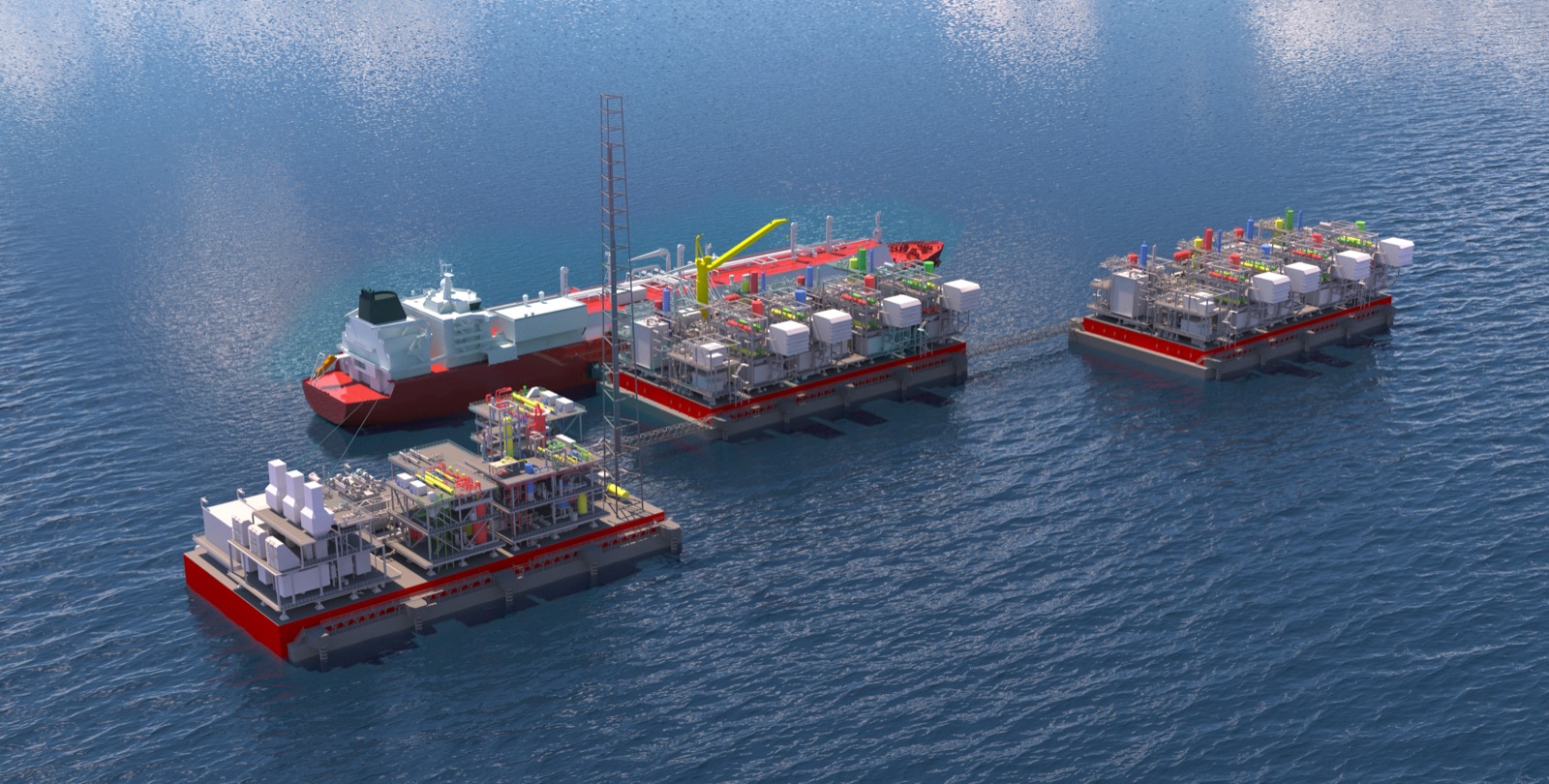
METS is Marinvest's system for building gas terminals at the coastline rather than on land. The terminal is assembled from standardised, prefabricated elements - foundation structures, process modules, storage and utilities - that are built at qualified fabrication yards, transported by sea and installed at the site. Once installed, the terminal operates as a complete facility for receiving natural gas, liquefaction and LNG export.
METS is a system family, not a single design: the same principles - modularity, yard fabrication, electric drive, marine siting - apply across fixed and floating configurations, selected per site.
METS is in concept and project development. Its principles are applied at scale in the Kino Aski LNG project.
Four elements, one terminal
Gravity-based, bottom-fixed or moored floating structures, selected per site conditions - construction methods matured on the Norwegian continental shelf.
Standardised liquefaction trains built as complete modules in yard environments, tested before transport.
Integrated LNG storage and ship loading directly at the terminal; at suitable deep-water sites, long trestles and major dredging campaigns can be avoided.
Designed for electric drive, enabling low-emission operation where renewable power is available.
Conventional onshore terminal versus METS
New configuration, established components
METS is built exclusively on components with operating track records at sea. Gravity-based structures have stood on the Norwegian continental shelf for decades; electric-drive liquefaction has operated at Hammerfest since 2007; modular fabrication and heavy marine transport are everyday practice in the offshore industry; liquefaction technology is standard and licensed. What METS changes is the configuration - a repeatable terminal system instead of a one-off construction project - and configuration risk is managed the offshore way: standardisation, yard-based integration and testing before transport.
Where METS applies
- LNG liquefaction and export terminals (primary)
- Terminal capacity scalable from single-module facilities to multi-train export hubs
- Adaptable to import/regasification and other coastal energy infrastructure